April 20, 2026 | 4 min read
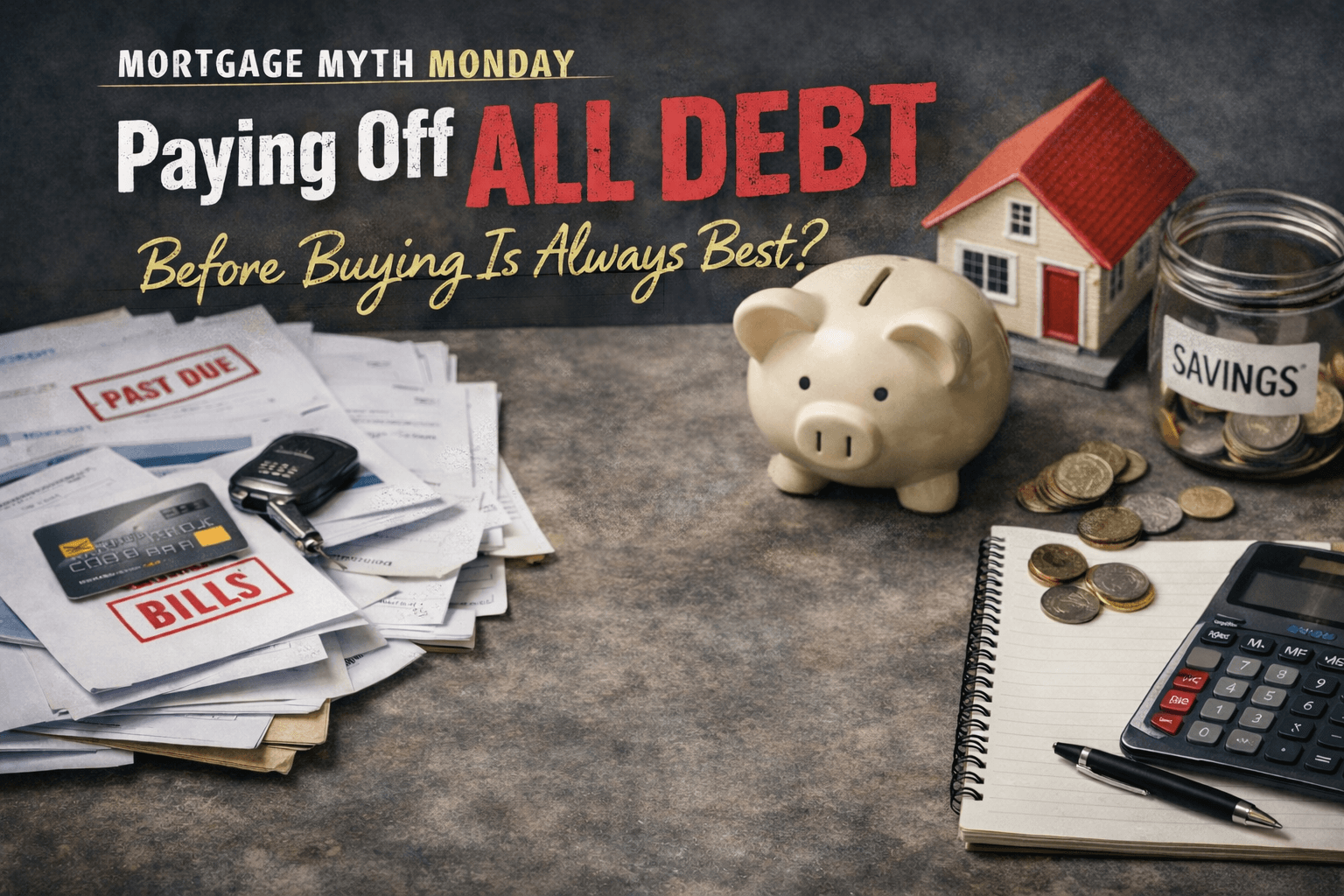
It sounds like smart advice on the surface: pay off every debt you can before you buy a home.
No car payment. No student loans. No credit cards. No monthly obligations hanging around like financial gremlins.
Cleaner budget, better approval, smoother process. Right?
Not always.
Here is the reality: paying off all debt before buying a home is not automatically the best move. In some cases, it helps. In others, it can hurt more than it helps, especially if it drains cash you need for the purchase itself.
That is what makes this one such a classic mortgage myth. It takes an idea that can be useful in some situations and turns it into a rule for everyone.
Most buyers understand that debt affects mortgage qualification. That part is true.
Lenders do look at your monthly obligations when evaluating how much home you may qualify for. If debt payments are too high relative to income, that can affect affordability and approval.
So people hear that debt matters and leap to a bigger conclusion:
“I should pay off everything before I even think about buying.”
That is where the myth goes off the rails.
Mortgage planning is not just about reducing debt. It is about balancing monthly payment, cash to close, reserves, credit profile, and overall financial stability.
Sometimes paying debt down helps.
Sometimes keeping cash on hand helps more.
Buying a home usually requires more than just qualifying on paper.
You also need funds for things like:
If a buyer throws every available dollar at old debt, they may improve one part of the file while weakening another.
That can create a strange little financial paradox: less debt, but also less ability to actually close.
A mortgage file does not win points for heroic self-sacrifice. It works best when the full picture makes sense.
There are definitely times when paying off debt is the right move.
For example, it may make sense when:
In those cases, targeted debt reduction can be smart and strategic.
The key word there is targeted.
Not every debt needs to vanish. Sometimes one or two specific balances matter far more than the rest.
This myth causes problems when buyers assume all debt is equally urgent.
It is not.
For example, a buyer might use a large chunk of savings to pay off a low-interest installment loan, only to realize later that those funds would have been more useful for:
In some cases, paying off debt also lowers available cash without creating enough improvement in qualification to justify it.
That is the part many buyers do not see coming.
They make a financially disciplined move that feels correct, but it does not actually improve the mortgage outcome in a meaningful way.
A maxed-out credit card balance and a manageable car payment are not the same animal.
Neither is an old student loan with a modest required payment versus a high revolving balance dragging down your score.
The better question is not:
“Can I wipe out all my debt before buying?”
It is:
“Which debts, if any, should I pay down first to improve my position without draining the cash I need?”
That is a much more useful conversation.
Before making large payoffs, buyers should look at the full mortgage picture:
Sometimes the winning move is paying down a credit card.
Sometimes it is leaving an installment loan alone.
Sometimes it is doing neither and preserving liquidity.
This is why broad internet advice can be so slippery. It often sounds neat and responsible, but real mortgage strategy is usually more tailored than that.
Myth: You should pay off all debt before buying a home.
Reality: Sometimes paying off certain debt helps, but wiping everything out is not always the best move.
The goal is not to arrive debt-free at all costs.
The goal is to put yourself in the strongest overall position to buy responsibly.
That means looking at qualification, cash to close, monthly comfort, and financial cushion together, not in isolation.
In mortgage planning, the smartest move is rarely the loudest one.
Sometimes the best strategy is not “pay off everything.”
Sometimes it is “pay off the right thing, and keep the rest of your plan intact.”
This article is intended for informational and educational purposes only. It does not constitute financial advice, legal advice, tax advice, or a commitment to lend. Loan options, qualification standards, and financial strategies may vary based on individual circumstances.
