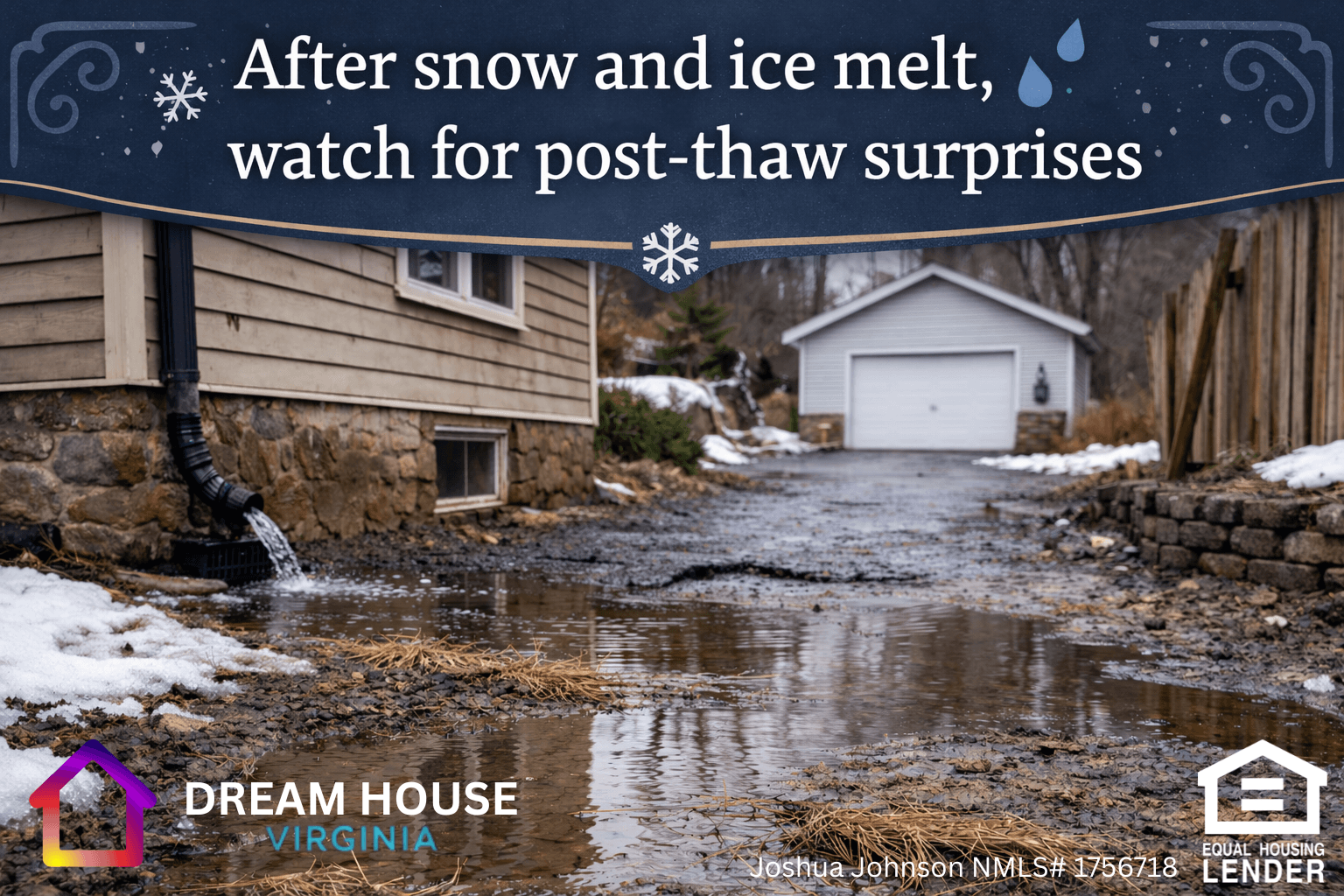
If you are touring homes in late winter or early spring around Richmond, Henrico, or Chesterfield, mud season can actually be your friend. It shows you clues you would miss on a sunny, dry day.
Here’s what to watch for, what it could mean, and how to protect yourself without spiraling into worst-case assumptions.
After a melt, you’ll often see:
Saturated yards that expose drainage issues
Puddling that highlights low spots and grading problems
Basement and crawl space moisture that was “on pause” during a deep freeze
Fresh cracks or shifting from freeze-thaw expansion
None of these automatically mean “run,” but they can affect your inspection strategy, negotiation, and sometimes even your loan timeline.
Walk the perimeter if you can.
Look for:
Standing water within a few feet of the home
Splash marks or “tidelines” on foundation walls
Soil washed out near corners
Why it matters: Water collecting near the foundation can lead to seepage, damp basements, and long-term structural wear.
Good sign: Downspouts extend away from the house and the ground slopes away.
A yard does not need to be perfectly flat, but it should guide water away from the home.
Look for:
Water pooling in the same spots
Muddy “channels” where runoff is carving paths
Mulch or soil that looks newly washed out
Why it matters: Persistent pooling can cause soggy landscaping, mosquito zones, and foundation moisture.
Gutters are boring until they are not.
Look for:
Gutters pulling away or sagging
Downspouts dumping water right next to the home
Overflow stains or erosion below roof edges
Why it matters: Even small gutter issues can create big drainage problems over time.
Quick win: Downspout extensions are often inexpensive and can prevent a lot of trouble.
If the home has a basement or crawl space, mud season is when it tells on itself.
Look for:
Musty odor
Damp insulation or visible condensation
Water stains on walls or floor
A dehumidifier running constantly
Fresh paint on lower walls (not always bad, but worth asking about)
What to ask:
“Have you ever had water intrusion here?”
“Do you run a dehumidifier seasonally or year-round?”
“Any sump pump history or warranty?”
Concrete and asphalt can crack from normal aging, but melt season can reveal new movement.
Look for:
New cracks that look sharp and fresh
Sections that feel uneven or sunken
Water pooling along the driveway edge
Why it matters: Minor repairs are common. Bigger settlement issues may hint at drainage problems or subgrade movement.
Saturated ground can push and shift outdoor structures.
Look for:
Leaning fences
Bulging retaining walls
Steps separating from the house or sinking
Why it matters: These can be simple repairs, or they can suggest ongoing soil movement that should be evaluated.
Even if you cannot access every area, the inside of the home may give hints.
Look for:
Ceiling stains near exterior walls or chimneys
Bubbling paint or warped baseboards on lower levels
Stains around windows
Floors that feel soft near exterior doors
Tip: If you see a stain, ask whether it is old, fixed, and documented.
Common and often manageable:
A muddy yard that dries within a day or two after rain
Minor driveway cracks with no sinking
A basement that feels cool and slightly humid but has no stains or odor
Worth a closer look:
Puddles that linger for days
Multiple water stains in a basement or crawl space
Strong musty smell, visible mold, or damp insulation
Downspouts dumping right at the foundation
Signs of repeated patching (fresh caulk lines, repeated repainting low on walls)
If something feels off, it does not mean the deal is dead. It means your inspection should be targeted and your questions should be specific.
A good home inspection is already important, but mud season is when you want to be extra intentional.
Consider adding or requesting:
Drainage evaluation if the yard is holding water
Crawl space specialist if moisture is present
Foundation specialist if you see shifting or significant cracking
Roof evaluation if you notice fresh stains or active leaks
If the inspector flags moisture, you may need:
Contractor quotes
Specialist visits
Further documentation from the seller
That can impact timelines, so it helps to plan for it early.
Sellers respond best to:
Inspection findings
Photos
Itemized contractor estimates
This keeps the conversation grounded in reality and makes solutions easier to agree on.
Most moisture or drainage issues are handled like normal repair negotiations, but there are a few situations where the loan side matters:
If repairs are required for safety, structural integrity, or habitability, the lender may require them to be addressed before closing (or structured properly).
If the home needs significant work, there may be renovation-financing options that bundle purchase + repairs into one loan, depending on the scenario.
This is where it can help to talk through the home’s condition early, before you are deep into the process.
Bring these with you and use them like a script:
Where does water go during heavy rain?
Have you ever had water in the basement or crawl space?
How often do you run the dehumidifier, and when?
Any sump pump installed? Any backup?
Have gutters or grading been updated recently?
Any drainage work done in the yard (French drain, regrading, extensions)?
You do not need perfect answers. You just want consistent ones.
Mud season is not just messy. It is information.
A thaw can reveal drainage patterns, moisture behavior, and freeze-thaw wear that you would not notice in perfect weather. If you know what to look for, you can make smarter decisions, ask better questions, and avoid expensive surprises later.
If you are shopping in the Richmond area and want a quick second set of eyes on what might matter from both a homebuying and financing perspective, reach out. We are happy to help you map out next steps and keep your path to closing smooth.
